
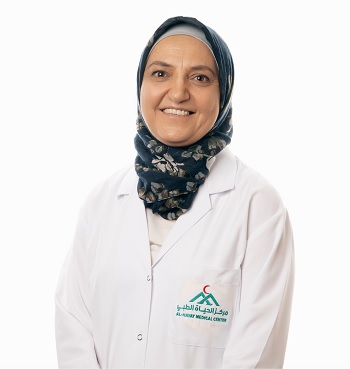
dr-mona-alnajjar-profile-picture

TIB INDEX DOCTOR PROFILE

Dr. Mona Ahmad Alnajjar

Laboratory Medicine - Clinical Pathology

1Medical specialty
1Practice branch
OVERVIEW

About the doctor

A physician and specialist in Laboratory Medicine and Clinical Pathology, holding a Doctor of Medicine degree from the University of Aleppo, with stated experience in microbiology department leadership, infection control, and laboratory diagnosis. She holds an active Qatari licence, P10214, within the scope of Laboratory Medicine / Clinical Pathology.

PROFESSIONAL BACKGROUND

Qualifications & experience

Education

  • Doctor of Medicine — University of Aleppo — Syria

Certifications

  • Specialist Certificate in Anatomical Pathology — Syrian Ministry of Health — Syria
  • Professional classification as a Clinical Pathologist — Saudi Commission for Health Specialties — Saudi Arabia — The CV states that she holds this classification; documentary review is required.

Professional experience

  • Head of Microbiology Department and Chair of the Infection Control Committee — Al-Basel Cardiac Surgery Center — Syria — The CV states that she held this role in Aleppo, with experience in managing and operating medical laboratories.
  • Physician and specialist in medical laboratories and laboratory diagnosis — Not specified in the source — Not specified — The CV states more than 10 years of experience and, elsewhere, more than 20 years; the exact duration requires verification.
EXPERTISE

Medical specialties

PRACTICE

Centers & branches

Find centers, branches and weekly hours here.

AL-HAYAT MEDICAL CENTER ↗

Laboratory Medicine - Clinical Pathology · Full-time

Primary center

AL-HAYAT MEDICAL CENTER - Main Branch

Al Waab Main Street, Al Waab, Doha, Qatar.

Primary branchAppointments availableAccepting new patients

ACCURACY AND SOURCES

Verification and information sources

Published information verified before publication

The information displayed on Dr. Mona Ahmad Alnajjar’s TIB Index profile was verified before publication. The administrative team reviews information and documents through the established workflows; new updates are reviewed before approval.

Professional license

License information verified

License number
P10214
Licensing authority
Department of Healthcare Professions (DHP), Ministry of Public Health
License type
Physician Practice License
Country
Qatar
License expiry date

Consult the official authority

Use Qatar’s Ministry of Public Health Department of Healthcare Professions practitioner search to look up the license number and registered scope of practice.

Search the official practitioner register — DHP

License number to search: P10214

Verification does not guarantee treatment outcomes. Government sources cover their registered information and do not imply ministry endorsement of the platform. Information can change after review; help keep it accurate by reporting errors.

FAQ

Frequently asked questions

What can comprehensive blood tests help assess?

“Comprehensive blood tests” can help assess several aspects of health, but the term does not refer to one standard test and may mean different test panels in different laboratories. They may include: • A complete blood count, which measures blood cells, haemoglobin and platelets and may provide clues about anaemia, some infections or inflammatory conditions, and bleeding disorders. • Chemistry or metabolic tests, which may assess blood glucose, electrolytes, kidney and liver function, and proteins. • Lipid testing, including cholesterol and triglycerides, to help assess cardiovascular risk factors. • Thyroid tests, such as TSH, when symptoms or clinical findings suggest a thyroid disorder. • Additional tests, such as iron, vitamin B12 or inflammatory markers, depending on the clinical context. An abnormal result does not establish a diagnosis by itself. Results should be interpreted alongside symptoms, medical history and the laboratory’s reference ranges, while considering factors such as medicines, food and the timing of sample collection. For available professional information, readers can view Dr. Mona Alnajjar’s profile on TIB Index.

When might a doctor request liver and kidney function tests?

A doctor may request liver and kidney function tests as part of a general health assessment, or when symptoms, risk factors, or a known condition require evaluation or monitoring. Testing may be considered with yellowing of the skin or eyes, dark urine, itching, swelling, persistent fatigue, changes in urination, or blood in the urine. It may also be relevant for people with diabetes, high blood pressure, heart disease, obesity, liver or kidney disease, or a related family history. These tests may be performed before starting certain medicines or during treatment, or during an acute illness, to assess organ function and monitor possible treatment effects. Kidney assessment may include blood tests estimating the glomerular filtration rate and urine testing, while liver assessment uses several laboratory markers. An abnormal result does not by itself establish a specific diagnosis; dehydration, medicines, or a recent illness can affect results, and repeat or additional testing may be needed. For available professional information about Dr. Mona Alnajjar, see her profile on TIB Index.

What role does the laboratory play in diagnosing infectious diseases?

The laboratory plays a central role in diagnosing infectious diseases by testing samples such as blood, urine, and respiratory swabs to identify the causative agent, whether a bacterium, virus, fungus, or parasite. Different methods may be used, including culture, molecular tests such as polymerase chain reaction (PCR), and antigen or antibody testing. Laboratories may also assess the susceptibility of certain bacteria to antibiotics and detect some resistance mechanisms, supporting treatment selection in collaboration with the treating clinician. Laboratory work further contributes to infection control and public health through case reporting, outbreak detection, and surveillance of emerging pathogens and antimicrobial resistance. The accuracy of a result depends on the specimen type, collection timing, and handling, and may be affected by prior antibiotic use. Results should therefore be interpreted alongside symptoms and clinical examination, not in isolation. For available professional information about Dr. Mona Ahmad Alnajjar, readers may consult her profile on TIB Index.

How can microbiology testing support appropriate diagnostic evaluation?

Microbiology testing helps guide an appropriate diagnostic evaluation rather than relying on indiscriminate testing. The choice should be linked to the patient’s symptoms, the suspected site of infection, and the likely pathogen. Depending on the clinical question, this may involve culture, a molecular test such as PCR, an antigen test, or serology. Selecting the right specimen—such as blood, urine, sputum, cerebrospinal fluid, or tissue—and collecting, timing, and transporting it correctly are also important because specimen quality directly affects result accuracy. Molecular tests may provide rapid information, while culture remains important in selected situations to confirm infection and assess antimicrobial susceptibility. Results must be interpreted alongside the clinical picture: a positive result can represent colonisation or contamination and does not always prove an active infection. It is therefore helpful to define the clinical question and consult the microbiology laboratory before collecting the specimen. For available professional information, readers may view Dr. Mona Alnajjar’s profile on TIB Index.