
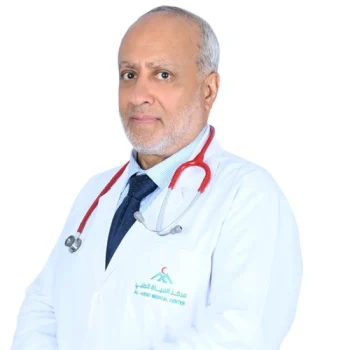
professor-dr.el-sayed-ibrahim-ali-salama-e1758058836485

TIB INDEX DOCTOR PROFILE

Dr. Elsayed Ibrahim Ali Salama

Consultant and Professor of Pediatrics and Neonatology

1Medical specialty
1Practice branch
OVERVIEW

About the doctor

A physician and consultant in pediatrics and neonatology with more than 40 years of stated experience in diagnosing and managing pediatric conditions and monitoring child development, with interests in pediatric gastroenterology, liver and respiratory conditions, and neonatal care.

PROFESSIONAL BACKGROUND

Qualifications & experience

Education

  • MSc in Pediatrics — Zagazig University — Egypt
  • MD in Pediatrics — Menoufia University — Egypt
  • MSc in Pharmacology — Zagazig University — Egypt
  • Bachelor in Medicine — Zagazig University — Egypt
EXPERTISE

Medical specialties

PRACTICE

Centers & branches

Find centers, branches and weekly hours here.

AL-HAYAT MEDICAL CENTER ↗

Consultant and Professor of Pediatrics and Neonatology · Full-time

Primary center

AL-HAYAT MEDICAL CENTER - Main Branch

Al Waab Main Street, Al Waab, Doha, Qatar.

Primary branchAppointments availableAccepting new patients

ACCURACY AND SOURCES

Verification and information sources

Published information verified before publication

The information displayed on Dr. Elsayed Ibrahim Ali Salama’s TIB Index profile was verified before publication. The administrative team reviews information and documents through the established workflows; new updates are reviewed before approval.

Professional license

License information verified

License number
P7429
Licensing authority
Department of Healthcare Professions (DHP), Ministry of Public Health
License type
Physician Practice License
Country
Qatar
License expiry date

Consult the official authority

Use Qatar’s Ministry of Public Health Department of Healthcare Professions practitioner search to look up the license number and registered scope of practice.

Search the official practitioner register — DHP

License number to search: P7429

Verification does not guarantee treatment outcomes. Government sources cover their registered information and do not imply ministry endorsement of the platform. Information can change after review; help keep it accurate by reporting errors.

FAQ

Frequently asked questions

When does a newborn need medical follow-up?

Newborns generally need a routine medical check within 3–5 days after birth, or within 1–2 days after early discharge from the hospital. The visit usually reviews feeding, weight, jaundice, the physical examination, and the results of hearing and other newborn screening tests. Timing may need to be adjusted according to gestational age, birth weight, the baby’s condition, and the clinician’s advice. Seek urgent medical assessment if a newborn has a temperature of 38°C or higher, a temperature below 36°C, breathing difficulty, blue or unusually pale skin, marked sleepiness or difficulty waking, seizures, refusal to feed or weak sucking, or substantially reduced urination. Urgent review is also needed if jaundice appears during the first 24 hours, spreads to the palms or soles, or if the area around the umbilical cord becomes red, swollen, or foul-smelling or produces discharge. Do not wait for a scheduled visit when a warning sign is present. See Dr. Elsayed Ibrahim Ali Salama’s profile on TIB Index for available professional information.

What does child growth and development follow-up include?

Child growth and development follow-up usually includes measuring weight, length or height, and head circumference—particularly during the early years—then plotting these measurements on growth charts appropriate for the child’s age and sex. Clinicians assess the child’s growth pattern and rate over time rather than relying on a single measurement. The visit also reviews motor skills, language and communication, learning, behaviour, and social and emotional interaction, including whether expected age-related milestones are being reached. Follow-up may also cover breastfeeding or diet, feeding difficulties, sleep, activity, mental health, and the home environment. Hearing and vision checks and a physical examination may be performed according to the child’s age and risk factors. Formal developmental or autism screening may be offered at specified ages or whenever a parent or clinician has concerns. If a delay or concerning pattern is identified, referral for specialist assessment or early intervention may be recommended. Visit schedules and screening tools vary by local guidance and the child’s health; developmental milestones are not, by themselves, a diagnosis. For available professional information, see Dr. Elsayed Ibrahim Ali Salama’s profile on TIB Index.

Which respiratory infection symptoms require medical evaluation?

Respiratory infection symptoms require urgent medical assessment if there is marked difficulty breathing, bluish lips or face, ribs pulling in with each breath in a child, persistent chest pain or pressure, confusion, extreme drowsiness, seizures, fainting, or severe weakness. Seek care as well if there are signs of dehydration, such as reduced urination, a dry mouth, or no tears in a child, or if a fever or cough improves and then returns or worsens. In infants younger than 12 weeks, a temperature of 38°C or higher requires urgent assessment. Contact a doctor promptly when symptoms are severe or persistent, or when the person is a young child or has asthma, heart or lung disease, or a weakened immune system, because the appropriate level of care varies with age and health status. For available professional information about Dr. Elsayed Ibrahim Ali Salama, readers can consult his profile on TIB Index.