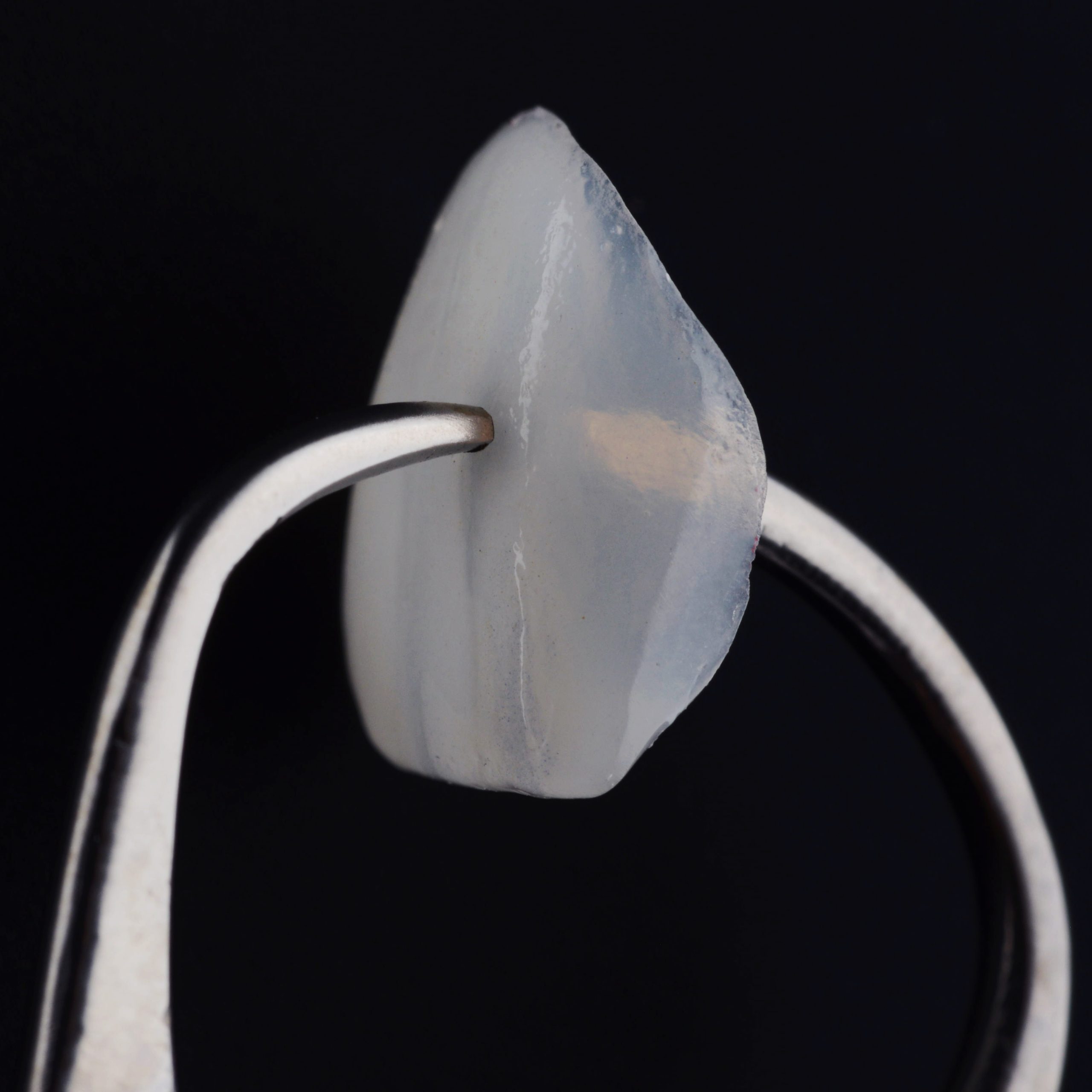
What are feldspathic veneers?
The commonly used medical term is feldspathic porcelain veneers. They are thin ceramic dental shells, usually fabricated in a dental laboratory and bonded to the front surfaces of teeth with dental adhesive materials.
They may be used to improve tooth color, shape, or symmetry, and may be considered for selected cases involving discoloration, small spaces between anterior teeth, limited wear, or irregular tooth edges. Suitability depends on the condition of the teeth, gums, and bite rather than on cosmetic preference alone.
Why are feldspathic veneers used?
Feldspathic porcelain has optical characteristics that can resemble natural enamel, including translucency and light reflection. This can support a highly natural-looking result when the veneer is properly designed and bonded. In selected cases, it can be fabricated at a relatively thin thickness, which may help preserve more tooth structure. However, this does not mean that every patient is suitable for no-preparation veneers.
Clinical evidence indicates that ceramic veneers, including feldspathic veneers, can have good medium- and long-term survival. Results vary according to the clinical situation, the amount of remaining enamel, veneer design, bonding technique, and maintenance. [1] [2]
Who may benefit from them?
A dentist may consider feldspathic veneers for selected cases involving:
Discoloration that does not respond adequately to tooth whitening.
Small spaces between the front teeth.
Minor differences in tooth shape or length.
Limited wear or superficial defects that do not require a more extensive restoration.
Mild smile asymmetry after evaluation of the bite and gums.
Decay, gum disease, bite problems, and tooth grinding should be assessed and managed before veneer treatment. Veneers may not be appropriate when substantial tooth structure has been lost, when strong biting habits are present, or when adequate oral hygiene cannot be maintained.
How is the treatment performed?
Treatment begins with an assessment of the teeth, gums, and bite, together with a discussion of expectations and the achievable result. The plan may include clinical photographs, digital records or impressions, and a mock-up to preview the proposed tooth shape before final fabrication.
The dentist then determines whether limited enamel preparation is needed. Records or digital scans are taken, and the laboratory fabricates the veneers according to the planned shade and shape. After the veneers are tried in and their fit is assessed, they are bonded with a resin cement designed for ceramic veneers.
Preserving enamel is an important factor in bonding. Systematic review evidence indicates that veneer survival is high when veneers are bonded to enamel, although the findings must be interpreted in light of differences among clinical studies and patient characteristics. [1]
Potential benefits
A natural appearance and favorable translucency.
Improvement of tooth color, shape, and symmetry.
Good resistance to staining compared with some other cosmetic materials.
Potential preservation of a substantial amount of tooth structure in suitable cases.
Good clinical outcomes when treatment is carefully planned and performed.
Risks and limitations
Veneers are not risk-free. Possible complications include:
Fracture, cracking, or chipping of the ceramic.
Debonding from the tooth.
Temporary or persistent sensitivity in some patients.
Marginal changes or discoloration.
Decay around the veneer when oral hygiene is inadequate.
The need for future replacement.
In a clinical meta-analysis, fracture or chipping was among the most frequently reported complications, although rates varied according to the studies, materials, and treatment designs. [2] A retrospective clinical study of feldspathic veneers followed for up to seven years also reported failures and ceramic chipping, highlighting the need for monitoring and the fact that veneers cannot be guaranteed to last for life. [3]
Are feldspathic veneers suitable for everyone?
Suitability cannot be determined from photographs or tooth color alone. The dentist should assess:
Tooth and gum health.
The amount of enamel available for bonding.
The relationship between the upper and lower teeth.
Tooth grinding or excessive biting forces.
Tooth color, shape, and size.
The patient’s ability to maintain oral hygiene and attend follow-up visits.
Other ceramic materials, such as reinforced ceramics or lithium disilicate, may be more suitable in some situations. There is no single material that is best for every patient; the decision depends on aesthetic and functional requirements and the amount of remaining tooth structure.
Care after veneer placement
Brush twice daily with a soft toothbrush and a suitable toothpaste.
Clean between the teeth every day.
Avoid biting pens, ice, or opening packages with the teeth.
Reduce habits that place excessive force on the veneers.
Use a night guard if recommended for tooth grinding.
Attend regular dental and gum examinations.
Conclusion
Feldspathic veneers are a relatively conservative cosmetic option for appropriately selected cases and can closely reproduce the appearance of natural teeth. Their outcome depends on diagnosis, enamel preservation, veneer design, accurate bonding, and oral hygiene. The decision should therefore follow a comprehensive dental assessment and a discussion of alternatives, risks, and realistic expectations.
This article is for general educational purposes and requires review and editing by a qualified medical reviewer before publication, including Dr. Heba Hassan Abdelfattah Hassan.
Sources and references
- A systematic review and meta-analysis of the survival of feldspathic porcelain veneers over 5 and 10 years
- Main Clinical Outcomes of Feldspathic Porcelain and Glass-Ceramic Laminate Veneers: A Systematic Review and Meta-Analysis of Survival and Complication Rates
- Retrospective Long-Term Clinical Outcome of Feldspathic Ceramic Veneers